Operations and Exceptions
Ask an operations team where container costs leak and two words come up quickly: demurrage and detention. The terms are often paired together, but they point to different problems and different follow-up actions.
The difference in plain English
Demurrage usually refers to charges when cargo or a container stays too long at the terminal after free time expires. Detention usually refers to charges for keeping carrier equipment outside the terminal beyond the allowed period. Exact tariff language varies by carrier and lane, but operationally the distinction matters.
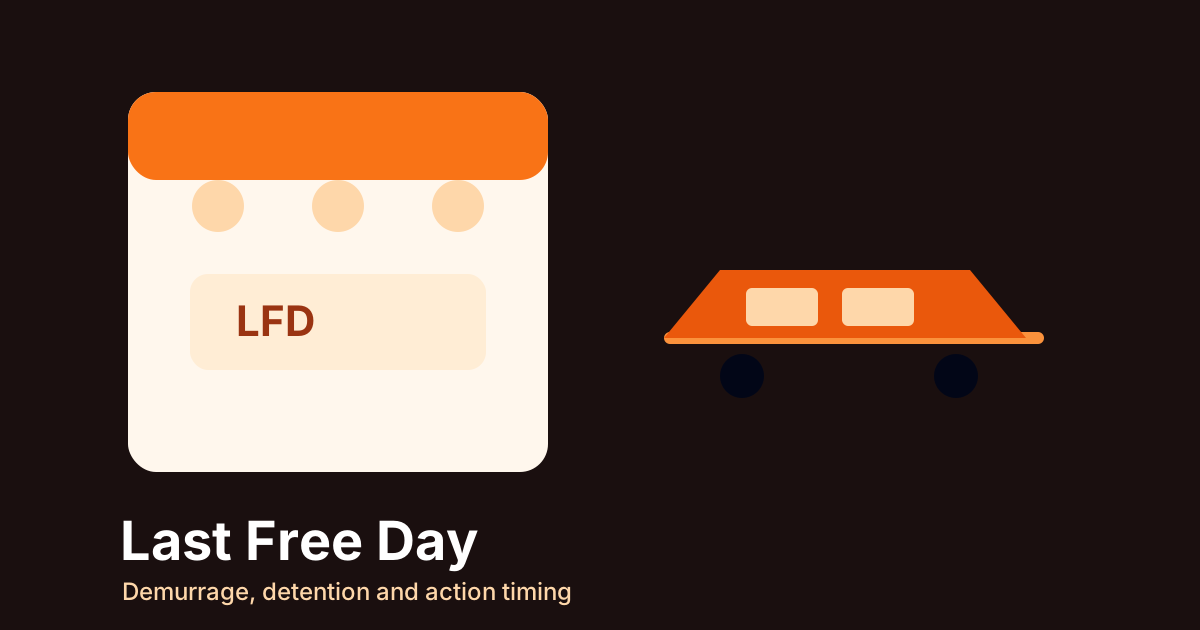
Last free day, or LFD, is the date before those charges begin for the relevant stage. Once that date passes, the issue changes from a tracking question to a cost-control problem.
Why teams miss LFD
Teams rarely miss LFD because nobody cares. They miss it because the signals are scattered. The vessel arrives in one system, customs status sits with a broker, documents are in email, and the warehouse plan is in a spreadsheet. By the time everyone sees the same picture, the free-time clock may already be nearly gone.
TrackCargo's BCO workflow keeps shipment records close to parties, documents, purchase-order context, custom fields, and last-free-day follow-up. That context is what turns a date into an action.
A simple LFD workflow
- Watch arrival, discharge, and availability milestones where carrier data is returned.
- Store the LFD on the shipment record when the team knows it.
- Keep documents, broker details, consignee contacts, and pickup instructions connected to the shipment.
- Escalate before the cutoff, not after charges begin.
- Mark collected when the shipment has left the risk queue.
Set up the risk queue before it is urgent
LFD work is easier when the rules are defined before a container is at risk. TrackCargo includes organization-level LFD defaults and a dashboard risk queue pattern, so teams can start with standard free-time assumptions, then override dates manually when carrier, terminal, broker, or internal information is more specific.
The practical goal is not to calculate every charge automatically. It is to keep a short, reviewable list of shipments that need attention. That list should show breached dates, critical dates, watch items, missing documents, delayed arrivals, collected containers, and the full shipment record behind each row.
- Define the team's default warning window for breached, critical, and watch states.
- Decide who can override LFD values and what note should be required.
- Keep the collected flag visible so picked-up containers leave the active risk queue.
- Review missing documents and broker handoffs alongside the free-time date.
What belongs on an LFD task
A last-free-day task should carry enough context for someone to act without opening five systems. At minimum, keep the port, container or B/L, consignee, broker contact, document status, pickup plan, and owner next to the LFD date. If the shipment has multiple containers, store the risk at the level your team actually works from.
The Federal Maritime Commission's demurrage and detention billing rulemaking focuses on invoice information, billing practices, and dispute timelines. For shippers, the everyday takeaway is not legal theory; it is disciplined record keeping before a charge appears.
Connect LFD to documents and billing context
Free-time follow-up often fails because the status, document, and billing trail are separated. A user may know the container arrived, but not whether the delivery order, customs release, invoice, or pickup instruction is ready. TrackCargo's BCO workspace gives teams a place to keep documents, parties, POs, SKUs, custom fields, and LFD follow-up together with the shipment.
For finance or operations review, keep enough history to explain why a charge appeared: when the shipment arrived, when the LFD was entered or changed, what documents were missing, who owned pickup, and whether the container was marked collected. That record is useful even when the charge cannot be avoided.
Make the handoff visible
A last-free-day date without an owner is only a reminder. Add a simple owner field or note for the person responsible for the next action: broker release, delivery order, pickup appointment, consignee confirmation, warehouse scheduling, or finance review. If the task changes hands, update the shipment record so the next user can see why the date is still open.
The same discipline applies after pickup. Marking a container collected removes it from the active risk queue and leaves a cleaner history for later review. That is more useful than leaving old alerts visible after the operations problem has already moved on.
Related TrackCargo guides
LFD work belongs close to shipment milestones, documents, and the BCO workspace, especially when purchase orders and item lines are part of the same shipment.
Further reading: FMC Demurrage and Detention Billing Requirements final rule.
Next step
If LFD is part of your day-to-day workflow, review the BCO workspace and connect LFD follow-up to the shipment record instead of managing it in a separate sheet.